On Friday 20 December, the renovated exhibit of the Muisca Raft, (Balsa Muisca), at the Gold Museum of Banco de la República (the Central Bank of Colombia) will reopen to the public.
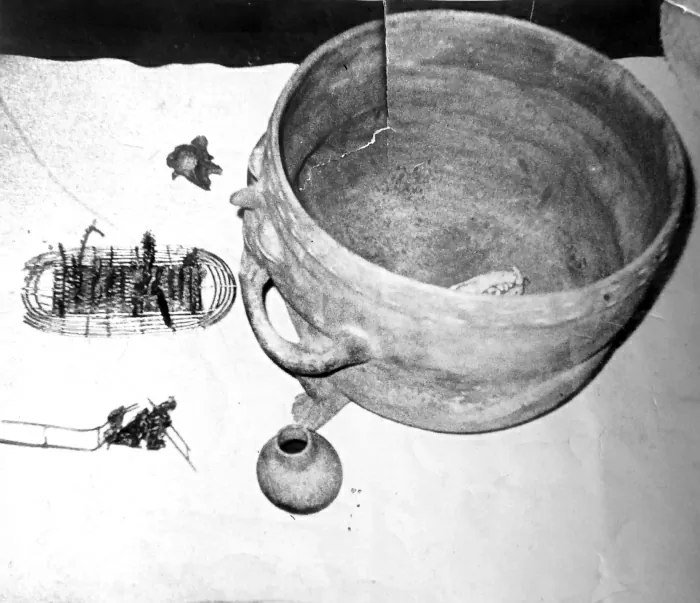
The exhibition features an innovative museography that seeks to enrich the narratives around this iconic piece, which will be exhibited for the first time along with other objects with which it was found inside a cave in the municipality of Pasca, Cundinamarca.
The renowned Balsa Muisca was part of an offering made up, in addition, of an offering vessel in the shape of a seated person, a small ceramic lime container, fragments of the skull of a feline, and a chieftain carried aloft in a litter, also made of gold. What can we make of all this?
Please note:
- In the Encyclopedia at Banrepcultural you can find more information about the Muisca Raft, a votive piece of goldsmithing. Consult here »
- For the Muiscas, offerings were acts of care for the world and were deposited in caves, lagoons, and other places that allowed a connection with the sacred.
- Learn more about the value that goldsmiths had for pre-Hispanic communities in the conference Luxury, yes, but not that way. Secrets and lies of pre-Hispanic art »
- Visit the new exhibit of the Balsa Muisca starting 20 December 2024. Schedule your visit to the Gold Museum in Bogotá and get to know the 7 regional gold museums »
The Muisca Raft is the largest votive figure, as well as the most elaborate, of the Muisca pre-Hispanic goldsmithing found so far, and it accounts for the advanced knowledge and techniques of the goldsmiths of the time. This votive piece, offered or made to fulfill a vow, was found in a cave on La Campana, a hill located in Pasca, Cundinamarca, on the southern border of the Muisca territory, by Cruz María Dimaté and her son in 1969. Later that year, the Balsa Muisca was acquired by Banco de la República to be safeguarded and has since become a prominent piece of cultural heritage and an icon of national identity.
Traditionally, the Raft has been associated with the legendary ceremony of El Dorado, which was described by Spanish chroniclers as a ritual where Muiscas made offerings of gold and emeralds to their deities in sacred lagoons of the moorlands.
From the current knowledge about the Muiscas, it is understood that these ceremonies had a high spiritual meaning. Their offerings were a vow given to care for the world, and the places of deposit connected them with non-human worlds. So, for these ceremonies, they elaborated pieces in which the selection of the technique and the alloys were related to the meaning of the offering and its message.
Years of research for the renovation of the exhibit
The updating and renovation of the Balsa Muisca exhibition at the Gold Museum in Bogotá is the product of recent research, seeking to enrich the experience of visitors by exploring not only the aesthetic beauty of the piece, but also its profound cultural significance and historical impact.
In collaboration with specialists in pre-Hispanic goldsmithing, conservation, architecture, and design, new technologies and exhibition methods have been implemented to allow for a deeper and more accessible understanding of this heritage. Visitors can find:
- New narratives: Content about the Muisca culture, its ceremonial practices, and the relevance of the Balsa Muisca in this context.
- Technologies: The process of creation of the Raft through the technique of the lost wax is explored, highlighting the technical and artistic skill of the Muisca goldsmiths and the symbolic meanings of the technique.
- Iconographic interpretation: Detailed analysis of the characters and symbols represented in the Raft, including the cacique and other participants in the ceremony.
- Cultural impact: A reflection on the cultural and symbolic meaning of the Balsa Muisca in the Colombian national identity and its international recognition.
The Gold Museum invites the national and international community to visit the renovated Balsa Muisca exhibition, which will be open to the public starting on 20 December 2024. This is an invitation to discover a unique piece, learn about Colombian history and culture, and reflect on the importance of preserving cultural heritage.
The visit to this exhibit will provide an opportunity to connect with Colombia’s pre-Hispanic past and appreciate the creativity, ingenuity, and spirituality of the indigenous peoples. Find more information about the Gold Museum here »