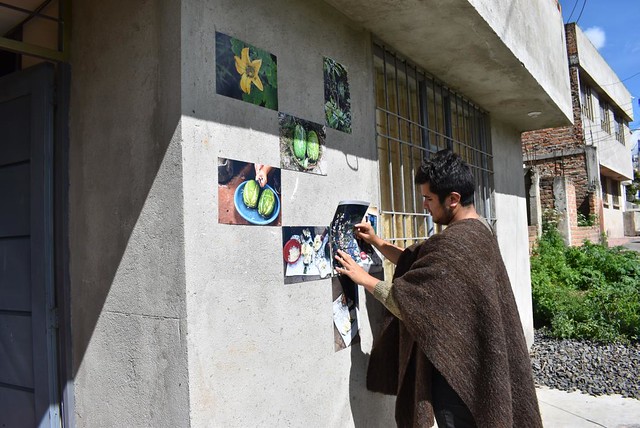
The Banco de la República Cultural Center in Ipiales is one of the most important cultural institutions in the border region between Colombia and Ecuador. Thanks to the cultural center’s programming, the community of Ipiales enjoys the National Concert Season, conferences on diverse topics, exhibitions, workshops, and the vast bibliographical collection of Banco de la República’s Library Network. These activities are held in exhibition rooms, an auditorium, a children's room, and a library.
The Banco de la República Cultural Center in Ipiales uses a community approach, directed especially to researching content related to the indigenous population of southern Nariño. Given its border location, it supports and develops joint cultural projects with Ecuador.
History
Banco de la República’s activity in Ipiales began when the central bank's agency in the city was inaugurated on August 31, 1979 by Dr. Rafael Gama Quijano, the bank’s general manager, and Dr. Jenaro Delgado Salazar, the first agency manager. The agency provided banking services in Ipiales from September 3, 1979.
On September 6, 1984, under the management of Mr. Eduardo Ponce Jurado, the agency became a branch in the new location in a self-owned building on the Pan-American Highway to Ecuador. A month later, on October 4, 1984, the cultural offerings began, with a broad bibliographic collection in the library and the children's room. Later, the Gold Museum was opened, where a permanent exhibition of gold, ceramic, and stone pieces by the indigenous people of Pasto began to be exhibited. A multipurpose room continues to host concerts and educational exhibitions.
In 1999, the Treasury and Gold Museum closed and the pieces were taken to Bogotá. Thus, the space became a Cultural Center with activity revolving around its collections and library services, in addition to an annual program extending to the urban and rural sector of southern Colombia and northern Ecuador with the aim of providing access to cultural services throughout the region of Nariño. The Cultural Center in Ipiales is also in constant communication with the Nariño Gold Museum’s cultural program in Pasto, where an extraordinary collection, part of the archaeological legacy of southern Colombia, is available to the public.